Team Nigeria concluded its campaign at the 2026 Commonwealth Games in Glasgow with a sixth-place finish on the overall medals table, failing to meet the ambitious target set by the National Sports Commission (NSC) despite producing several historic performances.
The Nigerian contingent returned home with a total of 23 medals comprising 10 gold, seven silver and six bronze, falling short of the Commission’s projected 22 gold medals and below the country’s haul of 35 medals recorded at the 2022 Commonwealth Games in Birmingham.
Before the Games, the Director-General of the NSC, Bukola Olopade, had expressed optimism that Team Nigeria would surpass the 18-gold benchmark established under the Elite Athletes Podium Finish Initiative, attributing the confidence to ongoing reforms championed by NSC Chairman Shehu Dikko and the support of President Bola Ahmed Tinubu.
Although the target was not achieved, Nigeria’s athletes delivered memorable performances across athletics, judo, weightlifting, para athletics, para powerlifting and swimming, showcasing the country’s growing strength in multiple sporting disciplines.
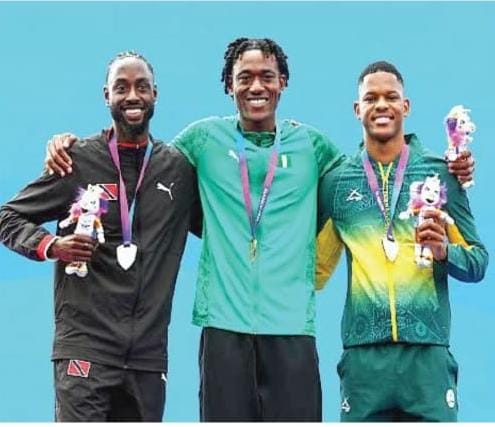
Among the standout performers was Samuel Ogazi, who etched his name into history by winning Nigeria’s first-ever Commonwealth Games gold medal in the men’s 400 metres after clocking an impressive 44.25 seconds. Fellow quarter-miler Ezekiel Nathaniel added another gold in the men’s 400m hurdles with a time of 48.47 seconds.
Nigeria also celebrated another historic feat through Chukwuebuka Enekwechi, who became the country’s first Commonwealth Games champion in the men’s shot put after recording a winning throw of 21.07 metres.
Other notable performances included Ella Onojuvwevwo, who claimed bronze in the women’s 400 metres, ending Nigeria’s 32-year wait for a medal in the event. Ruth Usoro secured silver in the women’s long jump, while Udodi Onwuzurike earned silver in the men’s 200 metres. Kayinsola Ajayi also won bronze in the men’s 100 metres, ending Nigeria’s 20-year medal drought in the blue-riband event.
The men’s 4×100 metres relay team and the mixed 4×400 metres relay quartet added bronze medals to Nigeria’s tally, while the women’s sprint relay team finished sixth.
Away from the track, Enku Ekuta delivered one of the competition’s most inspiring moments by winning bronze in the women’s -63kg judo event, ending Nigeria’s 24-year wait for a Commonwealth Games medal in the sport.
In a bid to motivate athletes throughout the Games, the NSC introduced an enhanced reward package midway into the competition. Gold medallists received 10,000 dollars, comprising 5,000 dollars in instant cash and another 5,000 dollars paid into their accounts. Silver medallists were rewarded with 5,000 dollars, while bronze winners received 3,000 dollars. Coaches of gold medal winners also earned 5,000 dollars, in addition to daily allowances provided for both athletes and officials.
Despite the improved welfare incentives and the remarkable individual achievements recorded in Glasgow, Team Nigeria’s sixth-place finish and reduced medal haul have raised questions about the country’s preparations and investment in elite sports as attention gradually shifts to future international competitions, including the next Commonwealth Games and the Olympic cycle.
Team Nigeria Finishes Sixth at Glasgow 2026 Commonwealth Games, Misses Medal Target

ByAzuka Chiemeka
Aug 2, 2026