

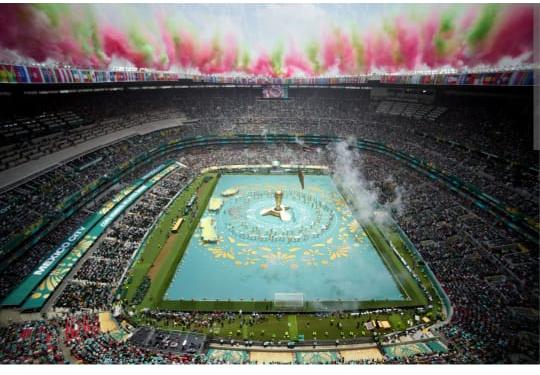
The 2026 FIFA World Cup got underway in spectacular fashion on Thursday as Mexico City blended football passion, cultural pride and entertainment at the iconic Azteca Stadium, even as protests and social discontent cast a shadow over the global showpiece.
Thousands of supporters clad in mariachi costumes and sombreros flooded the stadium, creating an electrifying atmosphere for the opening Group A encounter between hosts Mexico and South Africa. The ceremony showcased Mexico’s rich pre-Hispanic heritage, while international music stars Shakira and Burna Boy thrilled fans with performances of the tournament’s official anthem amid a dazzling display of fireworks.
For many Mexicans, the opening ceremony marked a historic moment as the country hosted the World Cup for a third time, four decades after staging the 1986 edition. The celebrations reflected national pride and excitement over welcoming the world once again to one of football’s most revered venues.
Away from the festivities, however, Mexico City remained a city divided.
The countdown to the tournament had been punctuated by demonstrations involving teachers, activists and relatives of victims of the country’s drug-related violence, all seeking to draw international attention to longstanding grievances. Several protests were scheduled across the capital on the opening day of the competition.
Thousands of teachers from different parts of the country marched through the streets demanding improved wages and better conditions for the education sector. Protest camps had occupied areas around the historic Zocalo Square in the days leading up to the tournament, prompting concerns that fan activities at the venue could be disrupted.
Authorities eventually confirmed that the Zocalo fan zone would remain open, attracting more than 50,000 football enthusiasts who gathered to watch the opening match on giant screens.
The contrast between celebration and dissent was evident throughout the city. Newly painted murals, upgraded public transport facilities and the renovated Azteca Stadium highlighted efforts to present a modern and welcoming image to visitors. At the same time, businesses erected barricades along major routes amid fears of unrest, while critics questioned the priorities behind the extensive beautification projects.
Many residents argued that resources devoted to preparing for the World Cup could have been channelled towards addressing persistent infrastructure challenges and improving public services. Others expressed frustration over the soaring cost of match tickets, which placed the opening fixture beyond the reach of ordinary citizens despite being hosted on home soil.
Reports indicated that some supporters paid as much as 3,000 dollars to secure seats for the tournament opener, reinforcing concerns that football’s greatest spectacle had become increasingly inaccessible to local fans.
Meanwhile, hosts Mexico made a winning start to their campaign with a convincing 2-0 victory over South Africa in the tournament’s opening match at the Azteca Stadium. The encounter was not without controversy, as tempers flared in a fiercely contested affair that produced three red cards, underlining the intensity and drama that accompanied the first game of the expanded 48-team competition.
Despite the controversies surrounding ticket pricing and the wave of protests, the opening day once again demonstrated football’s unique ability to unite people through shared passion and excitement.
As the curtain rose on the first-ever 48-team FIFA World Cup, Mexico offered the world a powerful image of celebration and contradiction — a nation eager to embrace the global spotlight while grappling with the social realities unfolding beyond the stadium walls.