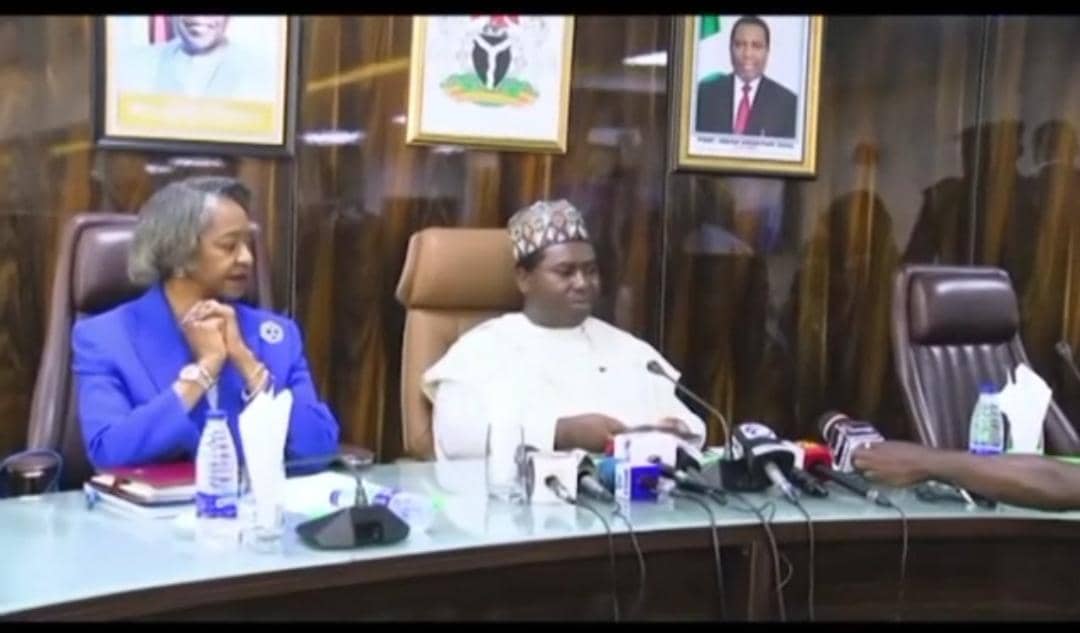
The Independent National Electoral Commission (INEC) has unveiled a draft overhaul of its Regulations and Guidelines for Political Parties, declaring that Nigeria cannot approach the 2027 General Election with an obsolete regulatory framework.
INEC Chairman, Joash Amupitan, made this position clear at a high-level consultative meeting with political party leaders in Abuja, where he stressed the urgency of aligning existing rules with evolving legal and electoral realities.
Amupitan said the proposed 2026 guidelines emerged from a rigorous internal review and are designed to reflect provisions of the Electoral Act 2026, particularly in light of shortened timelines for the next general election.
“INEC cannot navigate a 2027 horizon using a 2022 map,” he declared, in a pointed metaphor that captured the Commission’s resolve to recalibrate the electoral process.
Under the current timetable, Presidential and National Assembly elections are slated for January 16, 2027, while Governorship and State Assembly polls will follow on February 6, 2027—deadlines the Commission says demand precision planning and strict regulatory clarity.
The INEC boss maintained that credible elections are rooted in transparent pre-election processes, especially the conduct of party primaries and candidate emergence.
According to him, the revised framework addresses critical areas including party registration and mergers, internal administration, primaries, campaign conduct, party financing, election expenses, and conditions for deregistration. He noted that particular attention was given to provisions empowering the Commission to regulate campaign spending.
Amupitan further disclosed that the review drew from empirical findings of the Political Party Performance Index (PPPI), developed with support from the Westminster Foundation for Democracy, which exposed a disconnect between party structures and grassroots realities. The new draft, he said, embeds measurable benchmarks to enhance inclusion of women, youth and persons with disabilities.
However, the proposed reforms drew sharp reactions from political stakeholders.
National Chairman of the Inter-Party Advisory Council (IPAC), Yusuf Mamman Dantalle, called for urgent amendments to the Electoral Act 2026, warning that certain provisions could hinder effective preparations for the 2027 elections.
While affirming the commitment of political parties to credible polls, Dantalle criticised the mandatory direct primaries clause, insisting that the mode of candidate selection should remain the exclusive preserve of political parties.
He also faulted the requirement for submission of party membership registers, including National Identification Numbers (NIN), within limited timelines, describing it as impractical and potentially exclusionary.
IPAC further demanded the restoration of mandatory electronic transmission of results to the IReV portal, stricter penalties for vote buying, and the establishment of an Electoral Offences Commission.
The meeting, observers note, sets the stage for intense engagements between the electoral umpire and political actors as Nigeria inches closer to another defining electoral cycle.
INEC Pushes Fresh Party Rules, Warns Against ‘Outdated Map’ Ahead of 2027 Polls

ByAzuka Chiemeka
Mar 26, 2026