

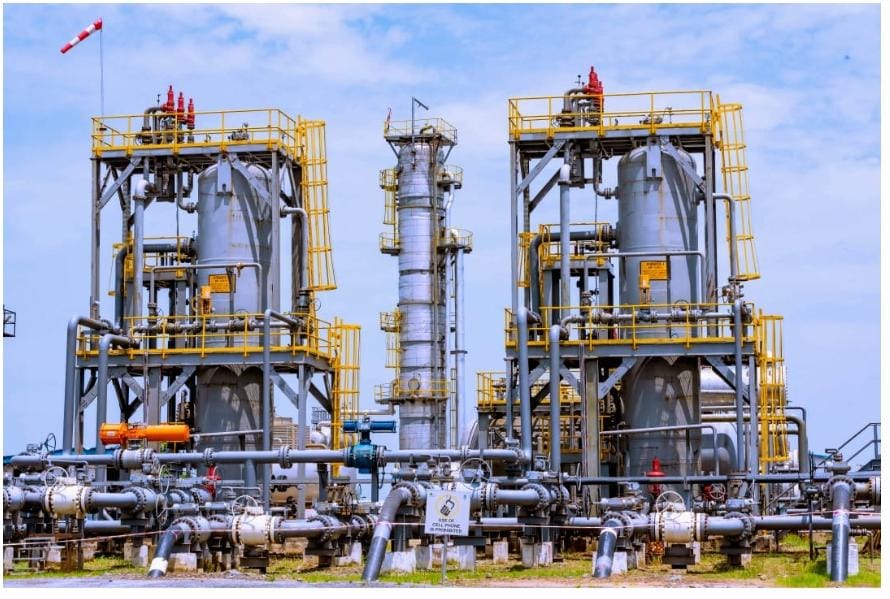

The Federal Government has reaffirmed its commitment to deepening reforms in Nigeria’s oil and gas sector, saying recent policy changes have restored investor confidence and positioned the industry for sustainable growth.
At the opening of the 25th Nigeria Oil and Gas (NOG) Energy Week 2026 in Abuja, the Minister of State for Petroleum Resources (Oil), Senator Heineken Lokpobiri, said Nigeria’s crude oil production has increased from about one million barrels per day in 2023 to over 1.8 million barrels per day.
According to him, the number of active drilling rigs has also grown significantly from 14 to more than 60, reflecting renewed exploration and production activities. He added that the Federal Government is working to increase production beyond current levels through improved security, regulatory stability and sustained investment.
Lokpobiri attributed the sector’s renewed momentum to the implementation of the Petroleum Industry Act (PIA), reforms introduced by the Tinubu administration and efforts to resolve long-standing industry challenges.
He also disclosed that indigenous oil companies now account for over 60 percent of Nigeria’s daily crude oil production following the successful divestments by Shell, ExxonMobil and ENI, while the international oil companies have shifted their investments to deep offshore operations.
To improve the ease of doing business, the minister said the Nigerian Upstream Petroleum Regulatory Commission (NUPRC), in partnership with the Independent Petroleum Producers Group (IPPG), has engaged PricewaterhouseCoopers (PwC) to conduct a global benchmarking study aimed at simplifying multiple taxes, levies and statutory charges in the industry.
In the gas sector, the Minister of State for Petroleum Resources (Gas), Mr Ekperikpe Ekpo, said Nigeria was leveraging its over 215 trillion cubic feet of proven gas reserves to drive industrialization, enhance energy security and diversify the economy under the Decade of Gas Initiative.
He noted that the Petroleum Industry Act and Executive Orders signed by President Bola Tinubu have improved regulatory certainty, introduced fiscal incentives and boosted investor confidence across the gas value chain.
Ekpo highlighted major ongoing projects, including the Ajaokuta-Kaduna-Kano (AKK) Pipeline, OB3 Gas Pipeline, expansion of gas processing facilities and the NLNG Train 7 Project, which is expected to increase Nigeria’s LNG production capacity from 22 million to 30 million tonnes annually.
He also said the Presidential Compressed Natural Gas (CNG) Initiative and the National Clean Cooking Programme are expanding domestic gas utilisation, reducing transportation costs, creating jobs and promoting cleaner energy.
The minister further reaffirmed Nigeria’s commitment to regional energy integration through the Trans-Saharan Gas Pipeline, Africa-Atlantic Gas Pipeline, Nigeria–Equatorial Guinea Gas Pipeline and the expansion of the West African Gas Pipeline network.
Meanwhile, the Special Adviser to the President on Energy, Mrs. Olu Verheijen, said Federal Government remains on course to achieve crude oil production of three million barrels per day and 10 billion standard cubic feet of gas daily before the end of the decade.
She revealed that Nigeria has attracted more than $10 billion in Final Investment Decisions (FIDs) over the past three years, while crude oil and condensate production has increased by over 400,000 barrels per day.
According to her, Nigeria’s external reserves have also surpassed $50 billion, reflecting growing investor confidence and the positive impact of ongoing reforms in the nation’s energy sector.