

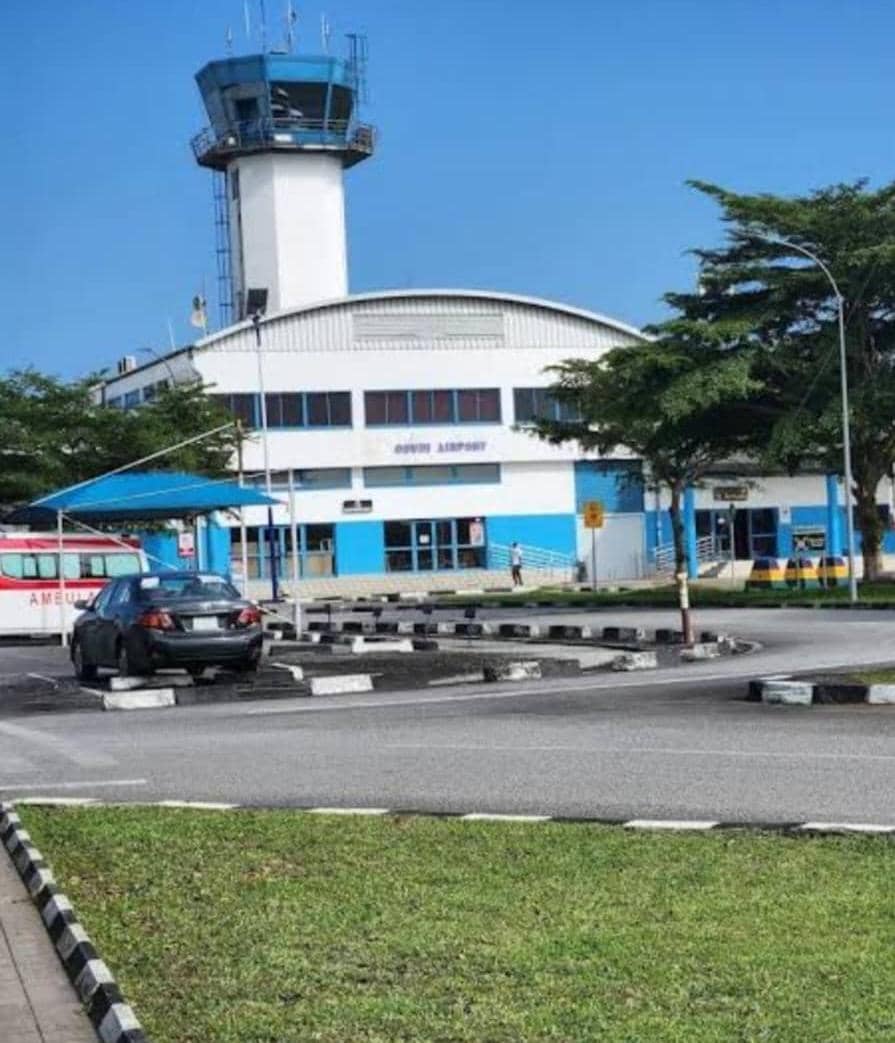
Fresh facts have emerged over the widely discussed incident involving a female passenger at Osubi Airport, Delta State, after an online video alleged that she was unfairly prevented from boarding a flight and subjected to a manual search instead of the standard electronic screening process.
An independent investigation by our correspondent, including accounts from airline officials and airport personnel, presents a different sequence of events from the one portrayed on social media.
According to officials familiar with the incident, the passenger first attracted attention at the airline’s check-in counter after she allegedly declined to disclose the contents of her luggage when requested by airline staff as part of routine security procedures.
Sources disclosed that contrary to claims circulating online, her luggage was initially screened using the airport’s X-ray scanning machine, where suspicious images were detected. In line with established aviation security procedures, the bag was subsequently recalled for a physical inspection to determine the nature of the items identified by the scanner.
Officials explained that the passenger was requested to open her luggage for inspection but reportedly resisted the directive. It was gathered that airport and airline personnel spent more than five minutes persuading her before she eventually agreed to open the bag.
However, rather than cooperating with security officials, witnesses said the passenger began recording videos with her phone and allegedly became confrontational, creating a scene that disrupted normal airport operations.
The subsequent inspection reportedly revealed six tins of canned milk and two tins of sardines packed inside the luggage without appropriate packaging.
Security officials of United Nigeria Airlines explained that the items were not rejected because they were prohibited, but because of the manner in which they were packed, the quantity involved and the size of the bag. The passenger was advised that the items could only be accepted if they were properly packaged in accordance with airline safety and baggage handling regulations.
Despite repeated explanations, officials said the passenger refused to comply and allegedly climbed onto the airport’s X-ray screening machine, refusing to come down until her sister eventually persuaded her to do so.
Eyewitnesses also recalled hearing the passenger’s mother questioning her daughter’s conduct and expressing disappointment over what she described as an embarrassing public display.
Aviation security experts contacted by our correspondent stressed that manual baggage inspection is a globally accepted security procedure whenever X-ray operators are unable to clearly interpret an image or when further verification becomes necessary. They noted that such secondary inspections are standard practice at airports worldwide and are designed solely to guarantee the safety of passengers, crew and aircraft.
At the conclusion of the screening process, the six tins of milk and two tins of sardines were handed over to the passenger’s mother after they could not be cleared for transportation in their existing condition.
Some airport sources further alleged that the passenger appeared to have deliberately documented the incident for social media content, although this claim could not be independently verified.
The incident has nevertheless drawn attention to the importance of passenger cooperation with airport security procedures. Aviation stakeholders maintain that security screening is governed by internationally recognised protocols and is applied without prejudice to every traveller.
Despite the controversy generated online, officials commended the professionalism displayed by the management and staff of Osubi Airport, describing their handling of the situation as calm, patient and consistent with established aviation security standards. Industry observers also noted that the airport has continued to maintain a reputation for efficient passenger service, strict adherence to safety regulations and courteous engagement with travellers, reinforcing public confidence in the facility as one of the country’s well-managed regional airports.