

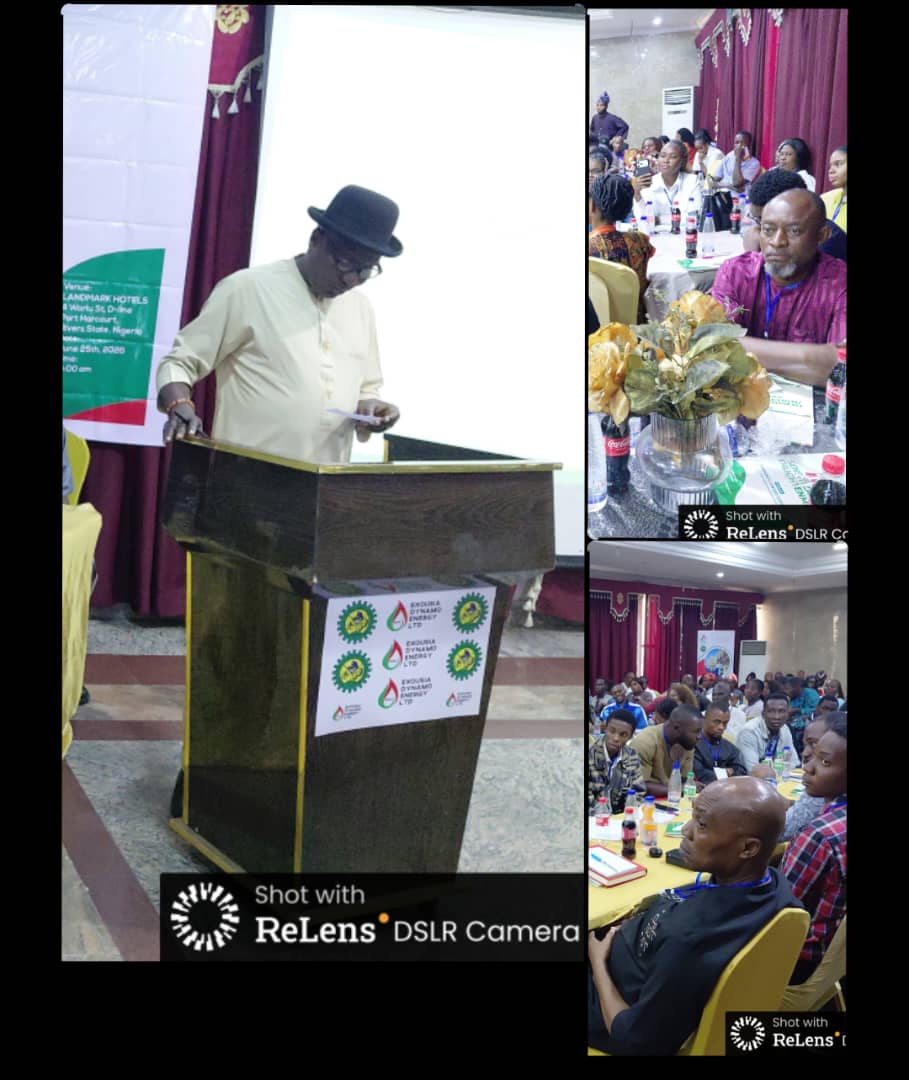
Stakeholders in Nigeria’s oil and gas industry have reaffirmed their commitment to strengthening host community participation in the sector through sustained sensitisation, capacity building, and strict adherence to Community Content Guidelines.
The resolve was expressed at a one-day Sensitisation and Enlightenment Workshop on Community Content Guidelines held at Landmark Hotels, D-Line, Port Harcourt, Rivers State. The workshop brought together community leaders, indigenous contractors, industry practitioners, regulatory officials, and other critical stakeholders to explore strategies for deepening local participation and maximising the socio-economic benefits of the Nigerian Content policy.
Declaring the workshop open, the General Manager, Zonal Coordination, Mr. Ifeanyi Ukoha, welcomed participants and described the forum as a strategic initiative aimed at expanding stakeholders’ understanding of the Community Content framework and its role in driving sustainable development within host communities.
He emphasised that continuous stakeholder engagement remains fundamental to the successful implementation of the Nigerian Oil and Gas Industry Content Development (NOGICD) Act, noting that informed communities are better equipped to participate meaningfully in the industry’s value chain while fostering transparency, accountability, and mutually beneficial partnerships with operating companies.
The first technical presentation was delivered by the Manager, Delta/Edo Zonal Office, Mr. Asangolo Dallas, who gave a comprehensive exposition on the Community Content Initiative. He explained that the initiative was designed to promote indigenous participation by empowering host communities through enterprise development, skills acquisition, employment creation, and increased access to business opportunities within the oil and gas industry.
Mr. Dallas stressed that effective implementation of the initiative would not only stimulate economic growth at the grassroots but also strengthen collaboration between operators and host communities, thereby promoting industrial harmony and long-term sustainability.
In the second presentation, Mr. Livinus Offre examined the Funding Opportunities for Local Contractors, providing participants with valuable insights into the financial support mechanisms available to indigenous businesses and community-based enterprises. He encouraged local contractors to improve their corporate structures, strengthen their technical capabilities, and maintain regulatory compliance to enhance their eligibility for funding and contract opportunities across the industry.
The workshop also featured a presentation by Mr. Ekpeme Alexander, who enlightened participants on the Nigerian Oil and Gas Industry Content Joint Qualification System (NOGIC JQS). He described the digital platform as the industry’s central repository for contractor registration, pre-qualification, and performance monitoring, explaining that proper registration on the platform significantly enhances a company’s visibility and competitiveness in securing oil and gas contracts.
A major highlight of the workshop was the highly engaging interactive session, during which participants sought clarification on a wide range of issues, including community content implementation, contractor registration, funding accessibility, compliance obligations, and business opportunities within the Nigerian content framework. The facilitators provided practical explanations and expert guidance, resulting in robust discussions that enriched participants’ understanding of the subject matter.
Participants commended the organisers for convening what they described as a timely, insightful, and impactful workshop, noting that the programme had broadened their knowledge of the Community Content Guidelines and equipped them with practical information to take advantage of emerging opportunities within the oil and gas sector.
The workshop concluded with a renewed call for sustained collaboration among regulators, industry operators, indigenous contractors, and host communities to ensure the effective implementation of Community Content Guidelines and to guarantee that the objectives of the Nigerian Content policy translate into tangible and lasting socio-economic benefits for host communities across the country.