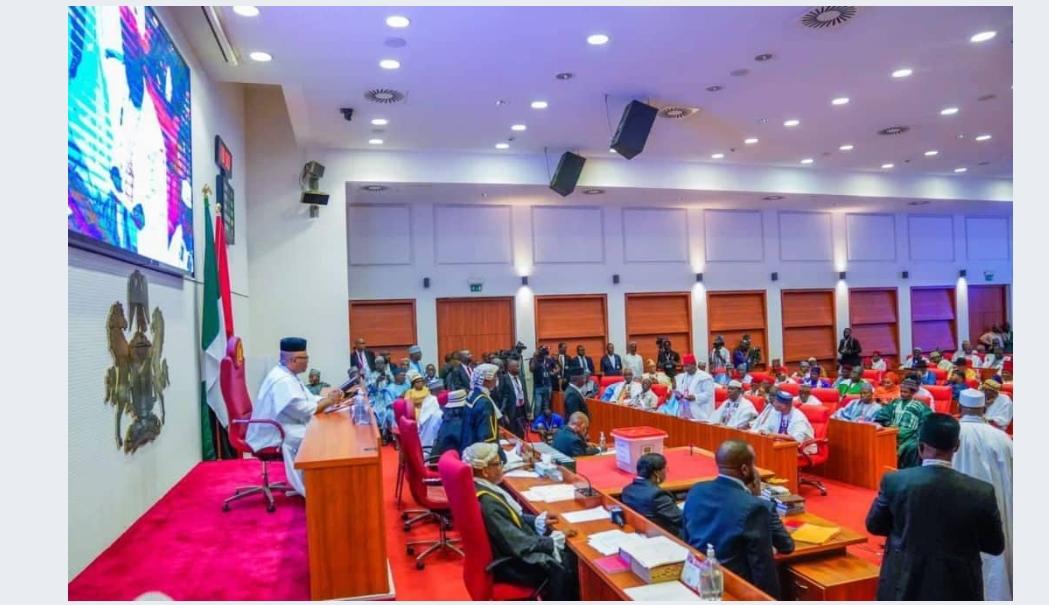
The Senate has passed a constitutional amendment bill seeking to establish State Police Services across Nigeria, marking a significant milestone in efforts to reform the nation’s security framework.
The bill, which was approved after lawmakers considered and adopted all 26 clauses during the Committee of the Whole, provides the constitutional basis for state-controlled police forces to operate alongside the existing federal police structure.
The proposed legislation is aimed at enhancing intelligence gathering, improving security coordination, and ensuring quicker responses to security threats within states and local communities.
Leading debate on the bill, Senate Leader, Senator Opeyemi Bamidele, described the amendment as one of the most far-reaching constitutional reforms since Nigeria’s return to democratic governance in 1999.
According to him, the bill, transmitted by President Bola Ahmed Tinubu, seeks to address longstanding concerns over the effectiveness, responsiveness and sustainability of Nigeria’s policing system amid growing security challenges.
Bamidele noted that the country’s centralized policing structure has come under increasing strain due to the rise in terrorism, banditry, kidnapping, communal clashes, farmer-herder conflicts, cybercrime and other forms of organised criminal activities.
Under the proposed arrangement, the Nigeria Police Force will continue to handle national security responsibilities, including counter-terrorism operations, border security, cybercrime investigations, organised crime, arms trafficking and policing of the Federal Capital Territory.
State police services, where established, will be responsible for enforcing state laws, maintaining public order, preventing and detecting crimes, and protecting lives and property within their jurisdictions.
The Senate Leader further disclosed that the bill contains safeguards designed to prevent abuse of state police powers by governors and other political actors. The provisions prohibit the use of state police to unlawfully target individuals, political parties, associations or groups, while also banning the deployment of policing powers for partisan, ethnic, religious or personal interests.
Supporting the bill, Senator Enyinnaya Abaribe of Abia South said worsening insecurity across the country had convinced him to abandon his previous opposition to the creation of state police.
He stressed, however, that the success of the initiative would largely depend on the provisions of the enabling Police Act, particularly those relating to operational guidelines and oversight mechanisms.
Abaribe also cautioned against granting excessive powers to the President to interfere with state police operations, warning that such powers could be subject to political misuse.
Similarly, Senator Aminu Tambuwal of Sokoto South backed the legislation, describing it as a necessary step toward strengthening Nigeria’s federal structure and addressing the nation’s persistent security challenges.
He cited recurring attacks and insecurity in parts of Sokoto State and other regions as evidence of the urgent need for innovative approaches to policing and public safety.
For the constitutional amendment to take effect, it must secure approval from at least two-thirds of the 36 State Houses of Assembly before being transmitted to President Bola Tinubu for assent.
Senate Passes State Police Bill, Moves to Reshape Nigeria’s Security Architecture

ByAzuka Chiemeka
Jun 24, 2026